Peugeot 607 2.0 Pack
The Peugeot 607 2.0 Pack is a sedan powered by a petrol engine delivering 138 hp (100 kW). It accelerates from 0 to 100 km/h in 10.6 s and reaches a top speed of 210 km/h. Fuel efficiency stands at 8.6 l/100 km combined, CO₂ emissions of 205 g/km. Drive is routed to the front-wheel-drive axle via a manual. This variant was introduced in 2001 as part of the Peugeot 607 (2000-2005) generation, and sits alongside 3 other variants in this generation. Full specifications — including engine displacement, transmission type, dimensions, weight, and historical list price — are available on the specifications page.
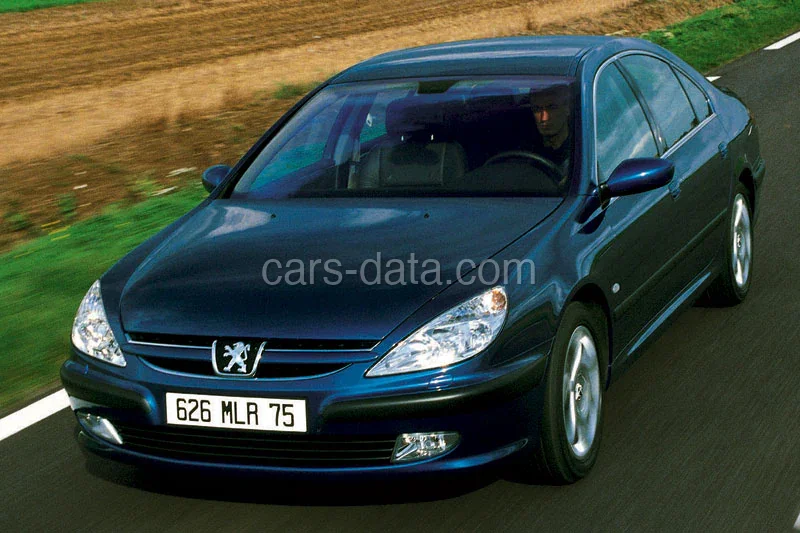
Peugeot 607, in detail.
Browse by category.
What is the engine power of the Peugeot 607 2.0 Pack?
The Peugeot 607 2.0 Pack produces 138 hp (100 kW).
How fast does the Peugeot 607 2.0 Pack accelerate from 0 to 100 km/h?
The Peugeot 607 2.0 Pack accelerates from 0 to 100 km/h in 10.6 seconds.
What is the top speed of the Peugeot 607 2.0 Pack?
The top speed of the Peugeot 607 2.0 Pack is 210 km/h.
What is the fuel consumption of the Peugeot 607 2.0 Pack?
The Peugeot 607 2.0 Pack has a combined fuel consumption of 8.6 l/100 km.
What are the CO₂ emissions of the Peugeot 607 2.0 Pack?
The Peugeot 607 2.0 Pack emits 205 g/km of CO₂.
What transmission does the Peugeot 607 2.0 Pack have?
The Peugeot 607 2.0 Pack is equipped with a Manual transmission.
Is the Peugeot 607 2.0 Pack front, rear, or all-wheel drive?
The Peugeot 607 2.0 Pack sends power through the FRONT WHEEL DRIVE drivetrain.
What is the engine size of the Peugeot 607 2.0 Pack?
The Peugeot 607 2.0 Pack has a 1,997 cc engine with 4 cylinders.
What is the torque of the Peugeot 607 2.0 Pack?
The Peugeot 607 2.0 Pack produces 190 Nm of torque.
When was the Peugeot 607 2.0 Pack introduced?
The Peugeot 607 2.0 Pack was introduced in 2001.